


Rough Top Belts vs. Smooth Belts in Printing Equipment – Which One Works Best?
4th Aug 2025
Rough Top Belts vs. Smooth Belts in Printing Equipment – Which One Works Best?
Printing machines need conveyor belts to work. They help things like printing press parts, papers, and materials move smoothly from one part of the shop to another. Choosing the right type of conveyor belt is important for keeping your business running smoothly, whether you run a small print shop or a commercial printing press.
You will have to make a choice between a rough top belt and a smooth belt, which is an important one. Depending on what you need, each has its own pros and cons. Some belts are better for holding on and controlling, while others are better for speed and constant movement.
We will talk about the differences between rough top belts and smooth belts, how to pick the best one, and how they are used in printing. We'll also show you how to find rough top conveyor belt suppliers you can trust.
What Are Conveyor Belts Used for in Printing?
Conveyor belts in printing equipment help move items like paper stacks, printed sheets, or even printing press parts from one area to another. They are used in machines like sheet feeders, stackers, or drying sections.
These belts increase efficiency by reducing the amount of work that needs to be done by hand and keeping things moving smoothly. A conveyor belt is used at different stages of the printing process, from putting paper on the machine to picking up finished prints.
There are two main types of belts used in printing:
- Rough top belts
- Smooth belts
Depending on what kind of material you're working with and how much grip you need, each one has a different use.
What Is a Rough Top Belt?
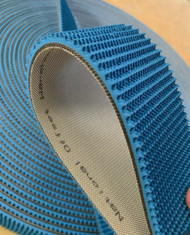
A conveyor belt with a rough, rubbery surface is called a rough top belt. This layer is rough, which gives the belt more grip and helps keep things in place as they move. It works great for light items or things that might slip while being moved.
In the printing industry, rough top belts are often used to move paper, cartons, or delicate parts of printing machines. Because of their grippy surface, these belts are commonly found in areas where slipping must be avoided—like in offset printing supplies or where printed materials must stay aligned.
Rough top conveyor belts are great for moving fragile or light items that are easy to move. Their rough surface keeps the parts stable during the process and reduces movement.
What Is a Smooth Conveyor Belt?
Smooth conveyor belts have a flat and even surface. These belts are often used in systems that need fast, continuous movement of materials. They are made from materials like rubber, PVC, or synthetic fabrics, and are designed to carry heavier or evenly spaced items.
While smooth belts work well in packaging or finishing areas, they may not be the best choice for slippery or uneven items. For example, if you are moving light sheets or small printing press parts, a smooth belt might allow the items to shift or fall off.
For large stacks, boxed items, or materials that don't need extra grip, smooth belts work best.
Rough Top Belts vs. Smooth Belts – Key Differences
To help you decide which belt works better for your printing needs, here is a simple comparison:
|
Feature |
Rough Top Belt |
Smooth Belt |
|
Surface Texture |
Grippy, rubbery |
Flat and smooth |
|
Slip Resistance |
High – great for light or delicate items |
Lower – needs even weight |
|
Ideal Use |
Slippery or small printing press parts |
Heavy or uniform items |
|
Common In |
Offset printing supplies lines |
Packaging or large sheet handling |
When you need grip and control, the rough top conveyor belt works best, as the table illustrates. On the other hand, a smooth belt works well when handling consistent loads at higher speeds.
Which Belt Works Best for Printing Equipment?
The right belt for your print shop depends on what you do there. If your machine can handle thin sheets, small parts, or light packaging, a rough top belt is usually the best choice. Its textured surface keeps items in place and avoids slippage.
If you’re dealing with bulk materials or large packages that are heavy and stable, smooth belts may be more efficient. They make it easier to clean and keep up and let you move faster.
Before deciding, always review the types of printing press parts and materials your equipment handles. Think about speed, weight, and whether you need more grip or smoother transport.
Where to Buy Quality Rough Top Conveyor Belts?
If you've decided that a rough top belt suits your needs, the next step is finding a reliable supplier. Suppliers of good rough top conveyor belts make belts out of strong materials that won't break down quickly.
Here’s what to look for when choosing a supplier:
- Material Quality: Pick belts made of PVC or rubber that can handle heat and static electricity.
- Size and Fit: Make sure the belt dimensions match your printing equipment.
- Customization Options: For certain machines, some suppliers can make lengths or widths just for you.
- Support and Service: A reliable supplier should offer help with fitting, replacing, or maintaining the belt.
Look for companies that specialize in parts for printing equipment and offset printing supplies. They’ll be more familiar with your needs and can offer the right product with proper technical support.
Conclusion
When it comes to choosing between a rough top belt and a smooth conveyor belt for your printing equipment, your decision should be based on the type of materials and parts you handle.
To get a better grip on small, light, or slippery items, use a conveyor belt with a rough top. Often, these belts are found in places that handle offset printing supplies and delicate printing press parts.
Go for smooth belts when working with heavier, stable items that move at high speeds and don’t need much grip.
Always buy rough top conveyor belts from reputable companies that know what the printing industry needs. Getting the right belt will help your work flow, keep parts from wearing out, and keep you from having to pay for costly downtime.
If you're unsure which option is best for your setup, talk to an expert who can guide you based on your specific machines and materials.